Anzac reflections 2026
Anzac Day reflections
As Aotearoa marks Anzac Day tomorrow, a time of national remembrance and reflection, we invite Dr Reuben Collier MNZM (Horouta, Mataatua, Te Arawa, Tainui), of Te Whare Wānanga o Awanuiārangi to share his whakaaro on the significance of this occasion. His work spans media, academia and public service, with a lifelong commitment to the 28th (Māori) Battalion. His reflections explore how identity, unity, leadership and intergenerational memory shape the ways we honour those who served, and the responsibility carried by whānau and communities across generations.
Anzac 2026: A Time of Quiet Absence, by Dr Reuben Collier MNZM
Anzac 2026 arrives with a different weight. The last of the 28th (Māori) Battalion have now passed beyond our sight. Their voices no longer open our ceremonies. Their presence no longer anchors our gatherings. What remains now sits with us, held in memory, carried in responsibility.
The Māori Battalion walked across distant lands, through Greece, Crete, North Africa and Italy. They carried more than weapons. They carried whakapapa, reo and the hopes of their people. Each step reflected a connection to home, even while standing in places far removed from Aotearoa. Their strength drew from identity. Their discipline drew from tikanga. Their unity drew from whanaungatanga. It lived in their ability to stand together as Māori, as whānau, as iwi, under conditions that tested the very edges of human endurance. These elements shaped their conduct in war.
We often speak of courage when we recall their service. We speak of sacrifice. Yet there remains a deeper lesson.
Collective strength.
Men from many iwi stood together with a shared purpose. Differences remained, yet a deeper bond guided them. They moved as one. They upheld one another. They understood that survival relied on unity, trust and shared responsibility. This way of standing together offers guidance that reaches beyond the battlefield.
As we mark Anzac in 2026, the question shifts from what they did, to what we now do.
With no living veterans of the Māori Battalion to speak directly, remembrance shifts into our hands. It calls for action in how we remember, how we teach and how we carry their stories forward. Their legacy cannot sit only within formal ceremony. It must live within homes, classrooms, marae, research and creative work. Each generation now holds a role in keeping these stories present and understood.
This responsibility carries urgency.
Across the world, conflict continues to unfold. Nations remain in tension. Lives continue to be shaped, and lost, through war. In this context, the history of the 28th (Māori) Battalion offers insight.
Their story speaks to leadership grounded in culture. It speaks to the strength found in identity. It speaks to the ability to stand with purpose under pressure. It also reveals the enduring impact of war on those who returned, and on those who waited at home.
The effects of war extended into whānau life. Silence often replaced storytelling. Strength often carried quietly. The generations that followed inherited these experiences in ways still unfolding today. These realities remind us that war does not end at the frontline.
So, what do we take forward?
We carry the importance of identity as a source of strength.
We carry the value of unity across iwi and community.
We carry an understanding of leadership shaped through culture.
We carry awareness of the long reach of war into future generations.
Anzac 2026 invites reflection and commitment. The 28th (Māori) Battalion no longer stands among us in physical form. Their legacy remains active through the choices we make. Through the stories we continue to tell. Through the values we uphold in our daily lives.
Remembrance now becomes a living practice.
Their journey continues through us.
Their legacy does not fade with their passing.
It becomes ours to hold.
Lest We Forget.
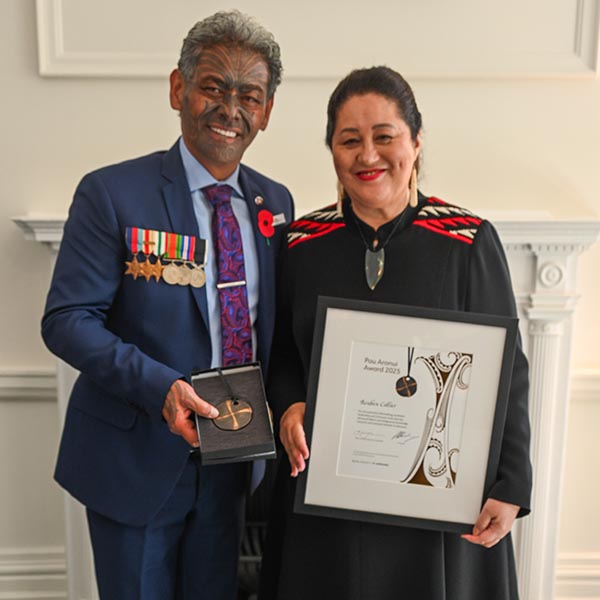
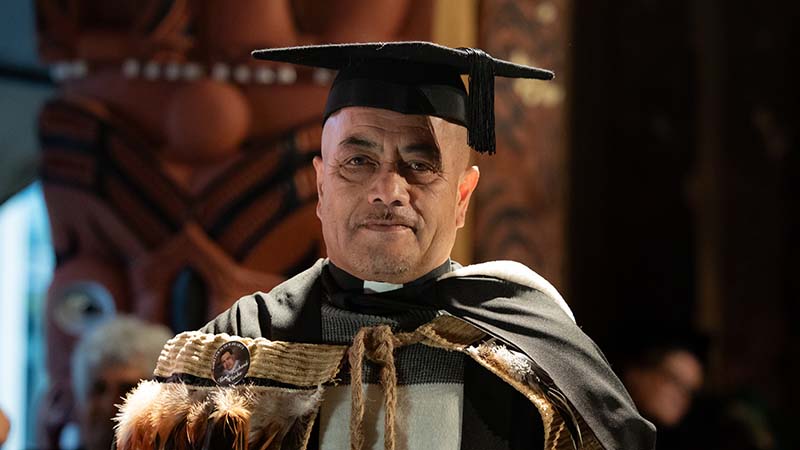
Dr Reuben Collier receives the 2025 Pou Aronui Medal from the Governor-General, Dame Cindy Kiro. He wears the war medals of his koroua, 65463, Corporal Matekino Te Keena (B Company), who fell at Cassino, Italy.
Whakapā mai/Contact us
For any enquiries, please contact us.
Hope Rolleston
- Phone: 027 236 6316
- Email: hope.rolleston@wananga.ac.nz
Related News
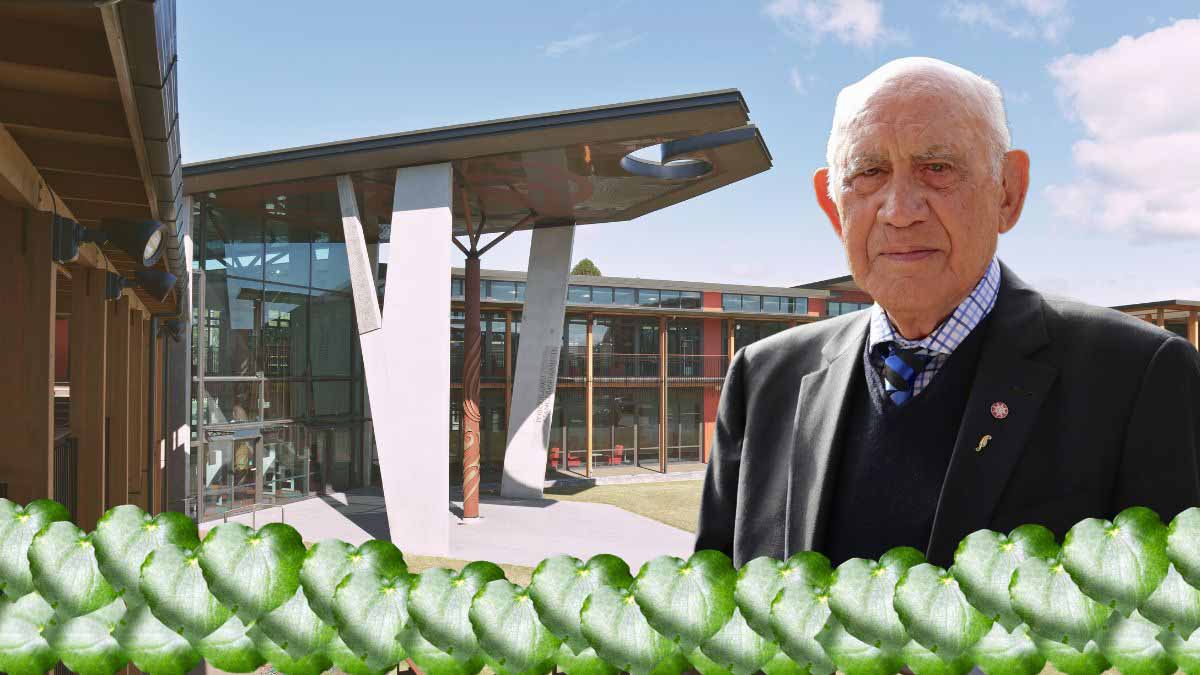
Kua hinga te toki tangatanga i te rā - Tā Hirini Moko Mead
Published date : Sat, 30 May 2026 12:57 pmHikohiko te uirā, papā te whaitiri ki runga i ngā awa ararau ō Tarawera, ō Te Awa o Te Atua, ō Rangitāiki, o Orini, o Whakatāne. Ka kūtia ka wherahia ngā toka tipua o Te Paepae ō Aotea, ko koe tēnā e Koro Hirini Mokohaerewa Mead.
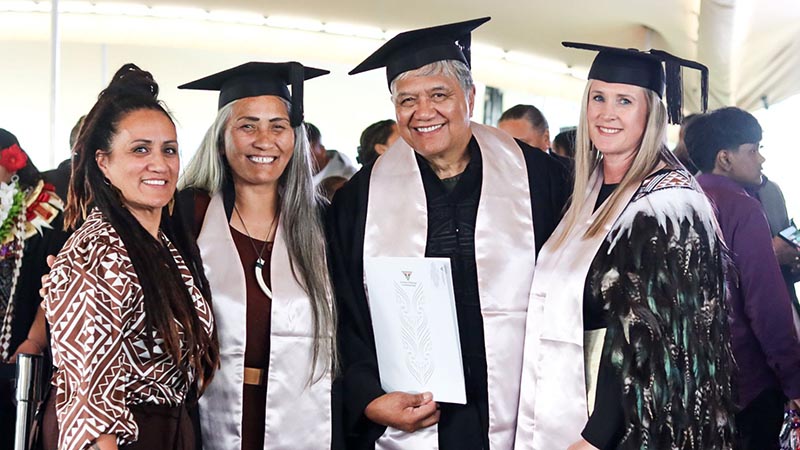
Graduation 2026
Published date : Mon, 04 May 2026 02:01 pmTe Whare Wānanga o Awanuiārangi celebrated the hard work and dedication of its tauira, marking another successful graduation with over 2,000 qualifications conferred.
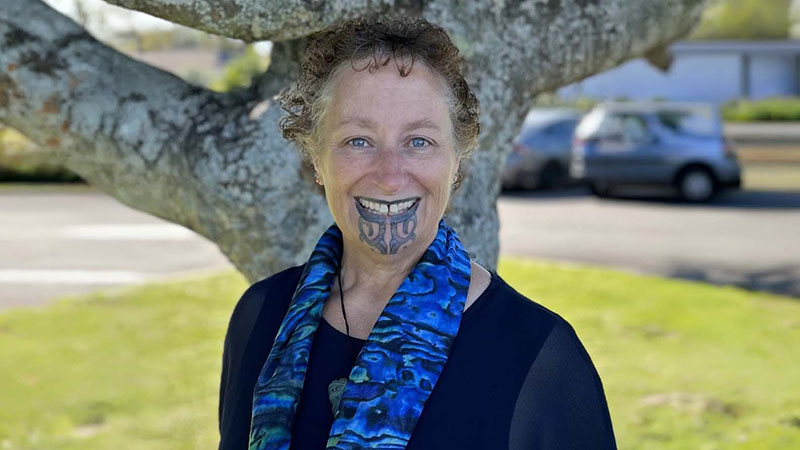
Research funding to empower whānau facing coastal climate change
Published date : Wed, 01 April 2026 04:37 pmAwanuiārangi has been awarded research funding from the Centre of Research Excellence Coastal People: Southern Skies, for development and delivery of an Earth Science Kete project as part of the Our Changing Coast research collective
Mihingare Studies at Awanuiārangi Explore Faith, Culture, and History
Published date : Mon, 30 March 2026 11:52 amMihingare (Anglican) Studies within the Bachelor of Humanities, provides tauira with opportunities to explore the historical, cultural and community dimensions of Mihingare in Aotearoa.